The spelling test comes back.
Nine ticks. One cross.
And the first thing she says isn’t “I got nine.” It’s this:
“I always mess up.”
You know what happens next. You say, “That’s not true! You got nine right!” And she looks at you like you just don’t get it.
Because to her, it feels true. It’s loud, it’s fast, and it sounds like a fact.
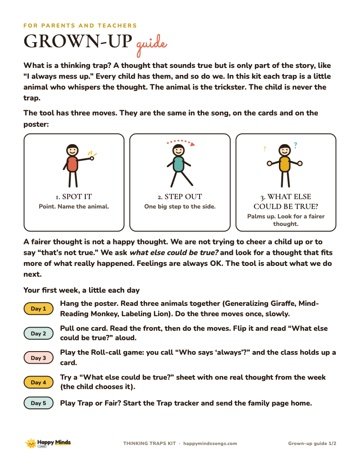
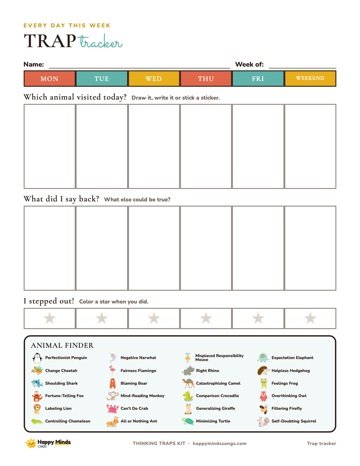
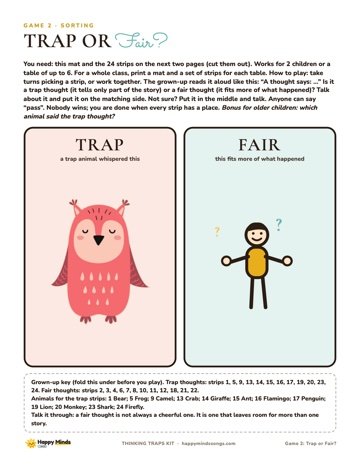
It isn’t a fact. It’s a thinking trap: a thought that sounds true but is only part of the story.
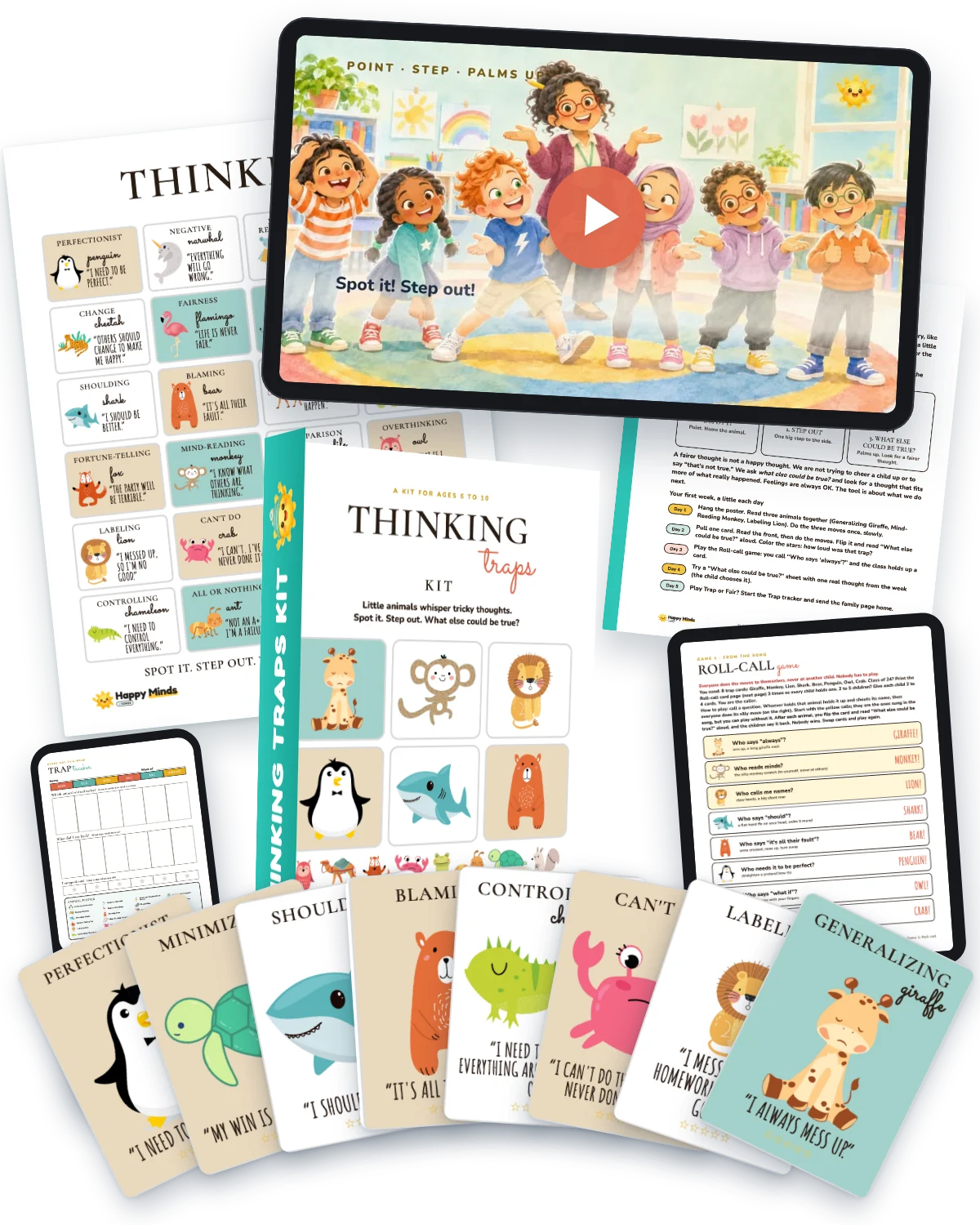
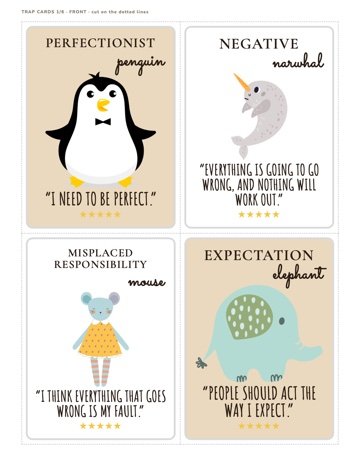
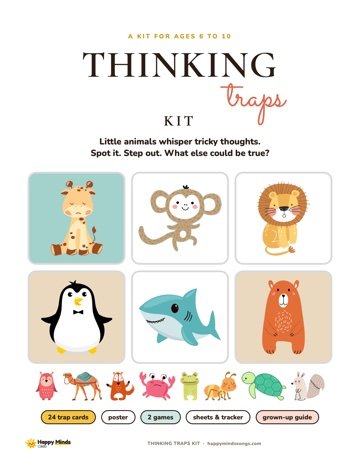
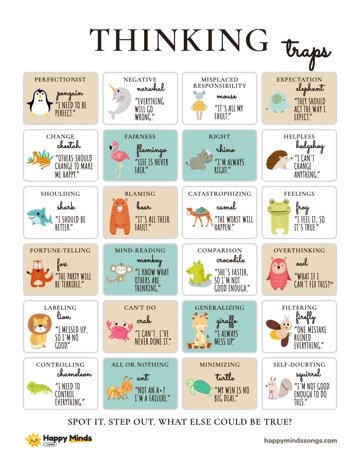
So in my cards, every trap is a little animal who whispers the thought. The animal is the trickster. The child is never the trap.
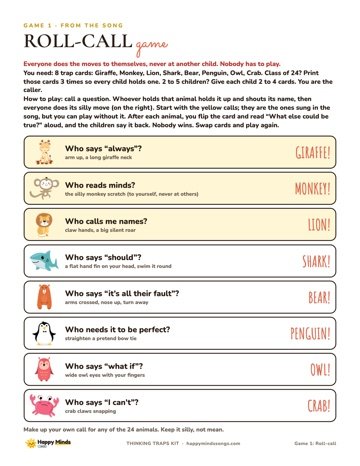
Generalizing Giraffe
“I always mess up.”
“I got nine right!”
Mind-Reading Monkey
“I know what others are thinking.”
“Maybe it’s a joke. I can ask!”
Labeling Lion
“I messed up, so I’m no good.”
“One mistake. I’m still learning.”
Here’s the part I love. A child can’t argue with a feeling. But she can point at a giraffe.
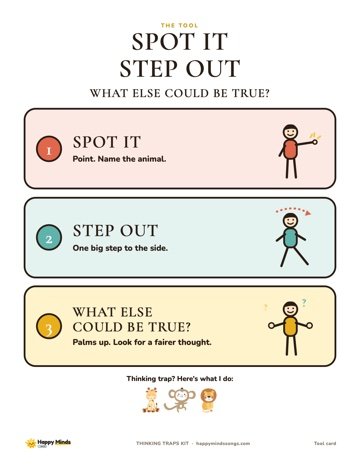
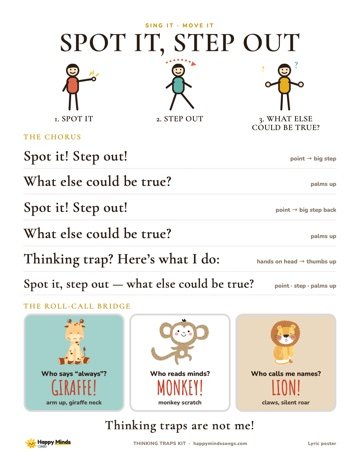
That’s the whole tool. Three moves, the same in the song, on the cards and on the poster:
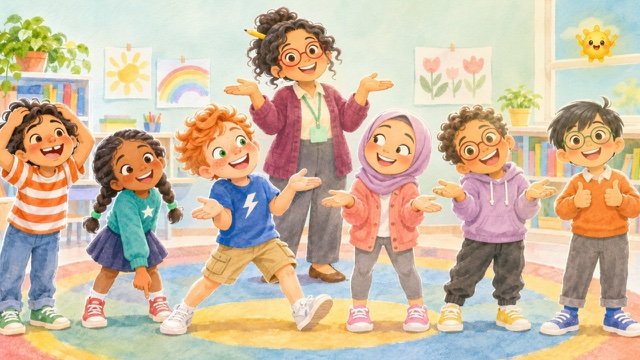
1. Spot it: point, and name the animal. “Giraffe!”
2. Step out: one big step to the side, out of the trap.
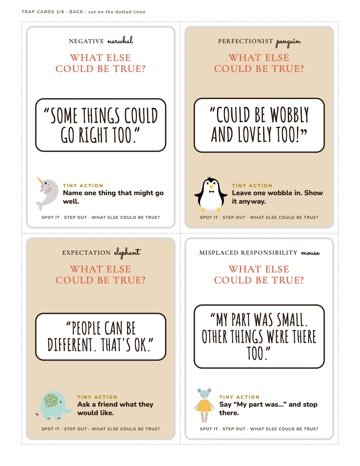
3. What else could be true? Palms up. Look for a fairer thought.
Notice what we don’t do. We don’t say “that’s not true.” We don’t ask for a happy thought. We look for a fairer one, a thought that fits more of what really happened. The feeling is always OK. The tool is about what we do next.
These thinking traps cards are my best-selling printable. For this kit I rebuilt all 24, gave every card a back with a fairer thought and one tiny action, and wrote a song so the moves stick.
I won’t promise the Giraffe never visits again. He will. They visit all of us. What I can give you is the same three moves, every time, at school and at home, until one day you hear it under her breath:
“Spot it, step out — what else could be true?”
Maggie, Happy Minds Songs